How to Serve Pinot Noir: Temperature and Decanting
The short answer: serve Pinot Noir cool but not cold, give it 15 to 20 minutes to open up, and use a good glass if you have one. Those three things make a bigger difference than most people expect. I sat down with our winemaker, Keith, to talk through our favorite serving tips, and here is how we think about each one and how to adjust for the wine and the occasion.
What temperature should Pinot Noir be served at?
There is a range, and the best temperature is the one you like, so experiment. What matters is knowing what happens at each end. When a wine is too cold, the aromas are muted, the acidity is more pronounced and can make the wine feel sour, and the tannins can taste more bitter. When it is too warm, the alcohol and oak flavors dominate and the wine loses its freshness and fruit.
A simple guide is the 20/20 rule. If your white wine is in the fridge, take it out 20 minutes before serving. If your red is at room temperature, put it in the fridge for 20 minutes before serving. That gets both into a comfortable cool range without a thermometer.
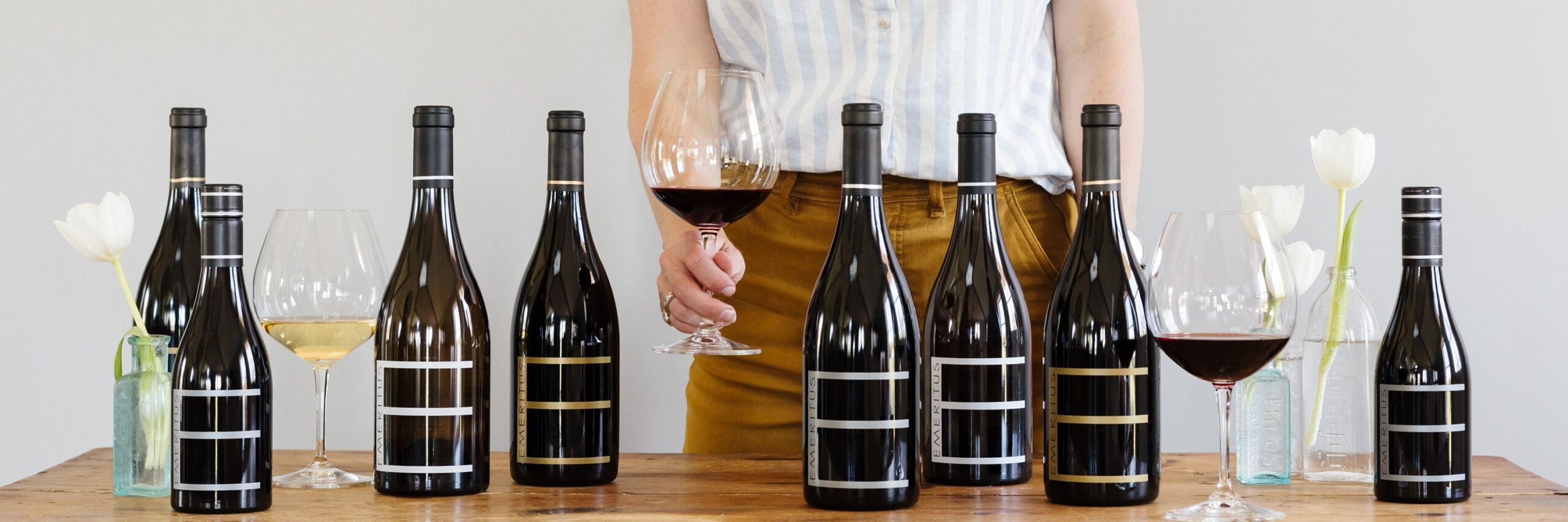
Our Hallberg Blanc is best cool but not as cold as you would serve other white wines, and our reds are best a little cooler than you might think. The weather and the mood change what feels right, too. A warm afternoon on the patio calls for a cooler glass than a winter dinner by the fire. When in doubt, start a little cooler than you think. It’s much easier to warm up a wine than to cool it down, and the bottle will warm as you drink it, so you’ll get that interesting evolution.
Do bigger reds need different temperatures?
Yes. The more tannic the wine, the more sensitive it is to being too cold, so big, structured wines should be served a little warmer. In our lineup, that means richer wines like the La Combette or Wesley’s Reserve. Lighter-bodied reds can handle more of a chill. We don’t make a ‘chillable red,’ but our lighter wines, like Pinot Hill East or Don’s Block, can handle a little more coolness. Pinot Noir sits comfortably in the middle: lighter than a big Cabernet, so it likes a little coolness, but with enough structure that you shouldn’t serve it ice cold.
Remember that the wine changes in the glass. Each glass and each bottle warms up as you drink it.
Should you decant Pinot Noir?
Decanting and oxygenating are not the same thing, and people often mix them up. There are two reasons to pour a wine into a decanter. The first is to separate the sediment in a really old bottle. For that, pour gently and stop before the sediment reaches the decanter. You can also strain it through a coffee filter or a sieve. With an old wine you are not trying to add air, because too much oxygen can make its delicate aromas fade away completely.
The second reason to decant is to oxygenate a young wine. A big, wide decanter adds oxygen, which makes the aromas more pronounced. The bigger and more tannic the wine, the more it benefits from that extra air. Pinot Noir takes less time to open up than a big wine, so 15 to 20 minutes is a good place to start. Taste it as you go, and stop when it tastes the way you like.
My own habit with a young bottle is to pour a small glass of Emeritus and decant the rest, then enjoy the wine as it evolves from the first sip to the last. The wine will get more air and will warm up, and it can be surprising how much a bottle can evolve in one sitting!
Does the glass really matter?
It does. The size and shape of the glass change how the aromas reach your nose and how the wine lands on your palate. If you have a glass made for the style of wine you are drinking, use it. You will notice the difference, and it is one of the easiest ways to get more out of a bottle you already own.
Putting it together
Take a bottle of Pinot Noir out about 20 minutes before dinner, or chill it for 20 minutes if it has been sitting at room temperature. Pour it into a good glass, start on the cooler side, and let it open up as the evening goes on. If it is a young bottle, give it 15 to 20 minutes in a decanter. If it is an older bottle, skip the decanter unless you need to leave the sediment behind.
Want to see how a Pinot Noir changes with time? Read How Long Should You Cellar Pinot Noir?