
In the summer I often meet people visiting the Russian River Valley for the first time who are shocked to be so cold all the time. For those who have been here, you know that layers are critical, with each day swinging from the low 50s to the low 80s. We are in a cool-climate region; I don’t have AC in my house, or in our tasting room, a fact that surprises anyone who thinks of California as sunny and hot. We don’t need AC because we have the marine layer, and it’s incredibly reliable.
The marine layer is the cool fog that rolls inland from the Pacific into the Russian River Valley from May to November. It is our natural air conditioning, and it is why our Pinot Noir ripens slowly and has its signature freshness.
What is the marine layer?
The marine layer starts as the North Pacific High, a system of high-pressure winds that pushes moisture and ocean currents from the Hawaiian Islands toward California. As the winds blow over the ocean, a sea mist develops. Once the mist reaches the coast, the cold ocean air hits the warm air on land, forming the marine layer, or fog. This occurs from May to November, the same time of year our Pinot grapes are growing and ripening. This is the same fog that makes a San Francisco summer “the coldest winter you’ll ever have.”
Where does the marine layer reach in Sonoma?
The Russian River Valley and Sonoma Coast are known for producing elegant Pinot Noirs. These are the cooler regions of Sonoma, where the climate is heavily influenced by fog and the nearby ocean.
There are two main areas along the Sonoma Coast where the marine layer moves inland: the mouth of the Russian River and Bodega Bay. The marine layer pushes inland along the breaks in the coastal mountain range, taking the path of least resistance. As it moves inland, it causes warmer air to rise, creating a vacuum that brings in more fog and a cool breeze in the afternoon. Our vineyards are perfectly situated to be covered in a blanket of this cool fog and benefit from the afternoon breeze, creating what Keith has coined “refrigerated sunshine,” the ideal conditions for ripening Pinot Noir.
Why does fog matter for Pinot Noir?
When planting our Pinot Noir vineyards, we look for areas that experience a large difference between daytime and nighttime temperatures, called the diurnal range. The Russian River Valley and many areas of the Sonoma Coast have a diurnal range of 30°F or more, making them ideal for growing Pinot Noir. This is one of the main factors that drew my dad to these vineyard sites. (For more on what makes our sites special, see Our Terroir.)
The marine layer brings cool nighttime temperatures of around 50–55°F. The cold nights slow down ripening, which retains the acidity in the grapes. The morning sun slowly burns off the fog, and warm, sunny afternoons give the vines energy to continue to ripen. This pattern repeats almost every day throughout our growing season. The balance of acidity and ripe fruit is what we love about Pinot Noir.
How does fog shape our wines?
While our vineyards are less than 10 miles apart, they do not have the exact same fog pattern. Because fog follows valleys and plains inland, each area of Sonoma is affected differently, even two vineyards in such close proximity. It is one reason we bottle our single-vineyard and single-block wines separately.
How does fog affect Hallberg Ranch?
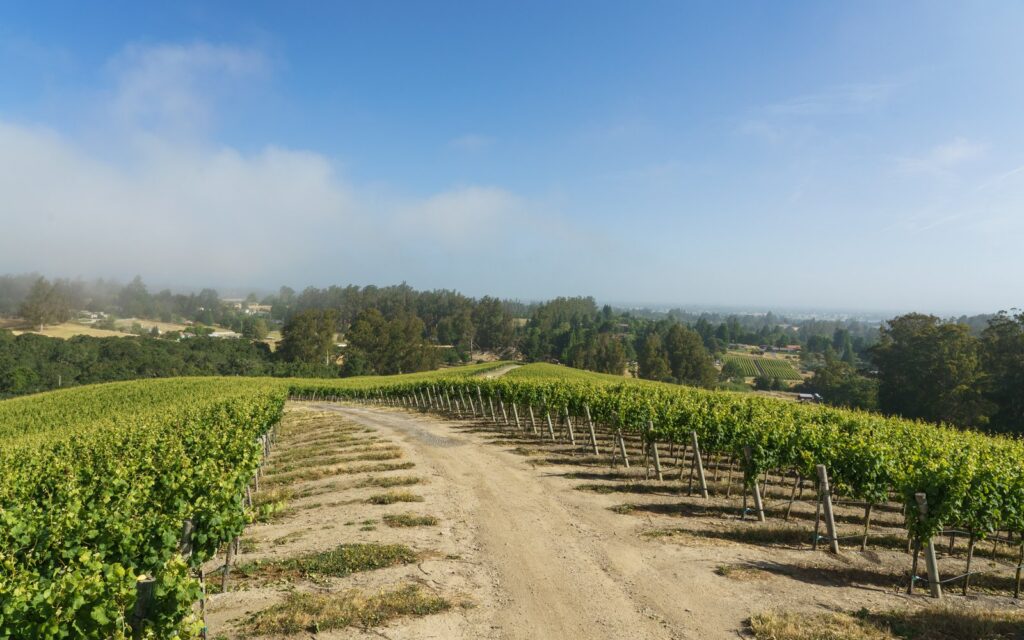
At Hallberg Ranch the afternoons are breezy as the marine layer starts to penetrate inland. When you look south and west at about 3 pm, you can see the fog rolling in, right where our Pinot Hill vineyard is. Overnight the fog settles in the valley and covers the vineyard until mid-morning, around 11 am, making way for beautiful sunny afternoons. The afternoon sun exposure creates riper fruit flavors.
How does fog affect Pinot Hill?
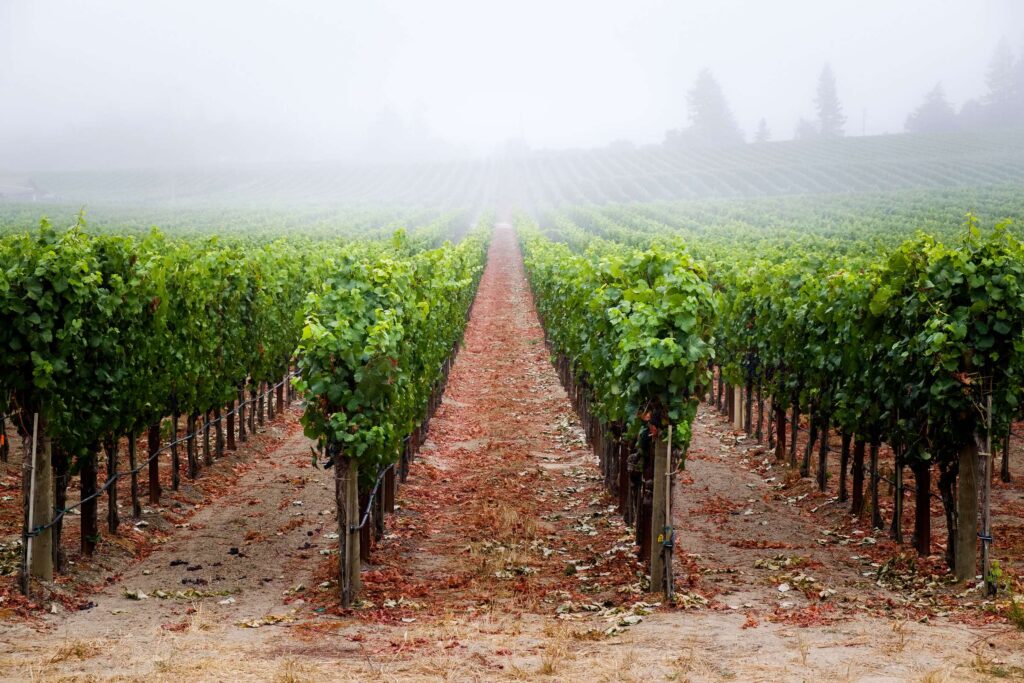
Pinot Hill is in the channel where the fog first pushes inland and is the last place it burns off. Here the fog lingers until noon most days and comes back around 3 pm. That means the fog blankets the vineyard for twenty or more hours a day during the growing season! We see lighter, more delicate-bodied wines with tart fruit flavors compared to the riper profile at Hallberg Ranch.
I always tell people that I like the same climate as Pinot Noir: I can’t be too hot, and I can’t be too cold. I love watching the fog roll into the valley and over the Golden Gate Bridge. The rhythm of the marine layer is the lungs of California. Taste the difference for yourself in our Hallberg Ranch and Pinot Hill wines.

